Sunday, June 24, 2012

Mr. Hop the Scissor's Origin Story

As it turns out this space is a monthly for me, I don't move at the pace of the internet, and really I'm not a blogger, I simply have a blog that I tell some of you about. I've sat on this post since January it was intended to be a response to Sharron Buttler's post on her blog Two Coats of Paint  about an MFA final crit she sat in on. I've been thinking about the relative value of an MFA since 2006 when I was sent my first bill from Brooklyn College for that particular degree and I sent Sharon some comments about what I thought about the experience. This is a version of the same things I sent her with pics I thought would be helpful.

Boats, c. 2003, approximately 10 x 12 inches

In 2003 I moved to New York with the specific intention of attending a fairly cheap graduate school in pursuit of an MFA degree. As it turns out I got into my second choice school, Brooklyn College (Hunter was first on my list). I thought I was a pretty hot shit, if modest, painter and I spent my first year at Brooklyn making competent modernist figurative paintings. My heroes at the time were New York School second generation painters like Louisa Mathiasdottir, Leland Bell and Paul Georges. In turn their heroes were also my heroes, the first generation ab-ex painters DeKooning and Hoffman but also figurative painters like Balthus, Derain, Matisse, Bonnard. I was making paintings just like they did, and I was at grad school trying to figure out how to make paintings like that matter to the world, it was a stance I took against the last 50 years of art history, but I was fine with that, I was a “rebel” in the sense that I was rejecting contemporary mores.

Untitled, 2004, 24 x 19 inches


I found some support for my beliefs at BC, Archie Rand and Patricia Cronin were hugely supportive. I liked Archie especially, he really understood what I understood about how important these artists really were. He was respectful, even reverent, in my studio. At the same time I was studying with Elizabeth Murray and William T. Williams. I'd met occasional resistance from both of them in personal studio crits but nothing I couldn't handle, I knew how to argue for an ideal beauty, I knew how to argue against how stupid and wrong minimalism and conceptual art were, I had moral high ground to stand on.

Bed, 2005, 24 x 36 inches


At the end of my first year I was confused but confident I was right, and it was with that confidence that I walked into my first year critique. Armed with some fairly large new paintings and tons upon tons of studies and small watercolors I was there to prove my worth as a painter, if not by quality at least by sheer volume. I was prolific, like Picasso, ya know? I made a lot of stuff, just look at my stream of semen, look at how well I paint! Look, will you? And if you don't see how great this particular bowl of apples is please look again, you have no IDEA how hard I worked on that pile of fruit, and it's grand, isn't it?

Untitled (after Caravaggio's Flagellation), 2004, 24 x 19 inches


The critique was vaguely praising, nice this, good touch here, lovely color, nice palette knife work there, etc.

And then, the last person to speak finally spoke. Elizabeth Murray, who I'd grown to respect for an abundant amount of reasons and who had recently suffered through an unimaginably grueling session of chemo therapy on what turned out to be one of her last days with us on this planet but who also somehow felt well enough that day to crit me and my classmates, said:

“Your work is inane”.

Which was a pretty easy thing to brush off, I mean the whole rest of the room pretty much told me I was the genius I knew I was so fuck her. Right?

And then it was suddenly summer and I had what seemed like eons of time off from the pressures of grad school. I had one more crit with a visiting artist that summer, Kara Walker, who couldn't figure out why I liked dead white guys any more than I could explain what it was about art that I was so in love with.

I felt awful, and worse, out of touch. That moment of that day killed something in me that needed to be killed. I went home and cried.

[ed. you can't feel bad for me here, I was an incredibly naive person, unaware of my own naivete, thinking it was some kind of secret knowledge.]

Untitled, 2005, 19 x 24 inches

I spent that summer making lots of paintings, reams upon reams of paintings on paper. And I thought all of that work was shit; horrible, awful, terrible things, an amazing amount of paintings, a whole new portfolio. Paintings I spat on, paintings I pissed on, paintings made from soap bubbles and ink, cartoon paintings, stuff I'd never made before. It was an awful summer of awkward growth.

Untitled, 2005, 19 x 24 inches

Untitled, 2005, 19 x 24 inches

I spent my second year at BC making what are probably the worst, ugliest paintings I've ever made, but I was making them as a free person, I discovered I was really good at making bad paintings, I was good at having bad ideas and I was really good at ugly. I had never let myself do that, I'd never really let go, I'd never let myself into my work in the way I did that semester, and the results were horrifying.

Quadripples, 2006, 18 x 24 inches

So I just made ugly art for a few years. I remember my second year crit was nearly silent. Quite a few of the undergrad faculty who sit in on the crits couldn't figure out what had happened, or why. I had murdered something precious, my own “taste” I guess, whatever it was that was preventing me from speaking from my own experience. Fear was part of that thing I'd just killed, fear of making a bad painting, fear of saying the wrong thing, etc. The thing was I didn't even recognize my defense mechanism as fear, I was proud of that mechanism, or at least I had been.

Untitled, 2006, 48 x 56 inches


Dancing in the Show Tonight, 2006, 48 x 48 inches
 
I spent a lot of time in my second semester reading artforum from the 70's, I figured I'd go to at least one of the sources of the rhetoric I was hearing. I read Don Judd's reviews in Arts magazine, the ones he wrote about the scene around him. I discovered young Jerry Salz's paintings were heavily influenced by Jasper Johns. I realized why he had quit making art and began writing. I began actually liking a lot of stuff I'd rejected before, not just liking it but thinking critically about why it was made and why it might be important.


Dickheads, 2006, 48 x 48 inches

Best of all, for my own work, I did get comfortable with making ugly things, and those ugly things became less ugly to me, because I'd made them and I had discovered a way of owning the things I'd been afraid to make. Making work became a way of working through having my ass handed to me by Elizabeth Murray. I never want another person to tell me that my work doesn't need to exist, and I'll likely never have the opportunity to have someone tell me that again in my life. But that's what grad school is for.

Untitled, 2006, 48 x 48 inches

I remember saying one thing in that final crit, when the notion that the new paintings were less than pretty came about I remember answering “yes, and I should have been making paintings like this years ago”.

70 paintings titled individually, the work as a whole has no title, 2011 - 2012, 10 x 10 inches each (excepting the one that's 10 x 12 inches) photo by Sharon Butler.


Monday, April 9, 2012

Intramurals isn't even a word.

For the past 8 months or so I've been slowly putting together this show for a gallery I used to lick envelopes for 15 years ago. This is the first exhibition I've organized for anyone, and although I'm constantly organizing exhibitions I'd like to see in my head making this real, it seems, is a real task. Not a task I mind, it's been a pleasure to be in the company of so many real artists and a disappointment to not have worked with the many more I really wanted to include but couldn't for lack of space or lack of organizational acumen on my part. I really wanted to include everyone I've ever known in this show.

I titled the exhibition Intramurals because I am, or was, so very bad at group sports as an youngster. I never had the skills or passion for a team effort, I never really got the whole idea of being a cog in a functioning wheel and I made many embarrassing mistakes trying to be that cog. There was the one time when I was playing indoor soccer, I was right in front of the opponent's goal and instead of heading the ball out of the way I tried to set the ball, volleyball style, to a teammate. And before that (here is a clue) were all the times I tried unsuccessfully to kick a home run in kickball and failed because someone in the outfield caught the ball. I wasn't an awkward kid, just bad at what seemed to come naturally to other kids. Honestly, when a ball came at me I tended to duck, dodge or get out of the way, I wanted nothing to do with balls. I gave up because constant softballs to the face kind of sucked.

"Curated" as it is from the pipe dream museum in my head Intramurals is by default about me, which is what I dislike the most about “curators”. I like to say that I “refereed” the show instead, because that's all I'm really doing. I'm not curating here, that takes thought, and a PhD, and millions of hours of reading art texts and history books. All I'm doing is calling some plays as I see them. Rounding up some loose ideas I had, herding some cats, getting them to be in the same room together. 

Art became my group sport in about 1988, back then I was good at sitting still, looking, thinking and daydreaming, still am. Much less demanding than piano lessons, painting and drawing lessons were my parents after school babysitter. They were busy running a business so I got busy making pictures when I wasn't at the library (my other sitters were Encyclopedia Britannica, Judy Blume, Richard Adams and Stephen King). I didn't get really serious about making things until about my senior year in college and I didn't start making things that were really mine until about 5 years ago.

Why do I tell you these things? Because the silly ball I bought at Paragon to use as a model for the card made me think of all of that. I'm putting the ball in the show, not as an artwork by me but as a ball by Tachikara. I bought the classic red one, I thought it was an appropriate illustration of what artists do within the walls.

So anyway, yeah, here is the thing:

Exhibition: Intramurals, an exhibition of painting, drawing and sculpture featuring recent work by Matthew Fisher, Stacy Fisher, Gina Magid, Sarah Mattes, Lucy Mink, Brent Owens, Heidi Pollard, Garric Simonsen, Ryan Steadman and Adam Thompson, refereed by Christopher Moss.

Where: Afa Gallery, 514 Lackawanna Avenue, Scranton, PA 18503

When: May 3-26, 2012, a reception for the artists will be held Friday May 4, 6-9 PM

Intramurals: From Latin intramuralis, from prefix intra-, meaning within and murus, meaning wall. 

Monday, February 13, 2012

I was asked recently to give a talk about my work so I spent some time digging out old treasures and photographing them today. These works from around 2002 - 2004 are from just before I went to grad school. 


Back then I was very comfortable being a "student of a student" of the New York post-ab-ex figurative school, painters that called themselves (or were called by others more likely) the 10th Street painters. Louisa Mathiasdottoir, Leland Bell, Rosemarie Beck, etc, many of whom are in this curious show at Schroeder Romero & Shredder: http://srandsgallery.com/index.php?/exhibitions/spring_summer_fall_winter 


As a student I was, and still am a fan of Jean Helion, a man who participated in the development of early modernist French abstraction in the late 1930's. Shortly after he made some very impressive machinist abstractions he went off to fight in WWII. The war ended and bits and pieces of European culture went their way. Many art and culture producers made their way back into the fabric of life that existed before the war. Much like Andre Derain after the first world war, post-WWII Helion rejected modernism in his own way (I should say reacted to modernism in his own way, because neither Derain or Helion fully rejected modernism). However, unlike Derain's conservatism Helion's return to the figure, and to urban and suburban French culture (he painted a lot of flea markets) is marked by fierce color, and prescient juxtapositions of ideas and images.


He clearly saw the absurdity of post war Parisian life in this painting from the early 50's. So strange that this man should be napping in front of a store called "golden". Is it some golden slumber, is he homeless? Was he drunk last night and now at 7 am about to wake to the cruel fate of hobbling home with only one shoe, aided by an umbrella? In most every instance it doesn't really matter, the painting makes it's own kind of sense. 


One of the reasons I admire Helion as an artist is his stylistic gear shifts, his chameleon like investigation into how to paint. It's almost as if every decade or so he got bored and decided to test his audience by switching styles. There's no transition period between painting loosely stylized figures to wildly colored street scenes to 10 years of intensely realized, highly detailed studio interiors. My inability to understand and come to terms with his motivations for this keep me invested in his weird flat footed alchemy.


This table of leftover junk, which became a motif of his in the early 70's, is maybe one of the best commentaries on late industrial culture by a French painter of the period. It's a cloud of discarded hand-me-downs, probably collected on a studio table and char. Spatially the objects sit together somewhere, but where? In some grey-green funk, to look means to have to pass through electric pink miasma. Despite his aesthericization of the abject I can't help but see some connection to the work of American artist Mike Kelley, who made work about the discarded and ignored parts of his particular culture beginning just a decade hence. 

Which is maybe a reminder that our culture will be defined (if anyone is around to define it) as much by our trash as by our treasures. Some anthropologist will come along and theorize on our own lives, pick through our trash, measure our bones and write theses about her findings. Helion's reputation, as far as I can tell, is far beyond the cultural trash can, it's undeservedly buried deep in a dump.


Speaking of anthropology and culture, I have a really great, well illustrated book on Helion that I can't read because it's written in French and I understand very little of that language I once studied in High-School. Thankfully there's lots of pictures to look at.


Monday, January 23, 2012

January is getting away from me now, and I promised I'd at least do this monthly. I've been sitting on a long essay on how I feel about arts education, specifically grad school for a month or more. I thought I'd post it for January but I'm uncomfortable with about 50% of it, so it waits. Here instead are some recent paintings that you'll have a chance to see in person soon, if you live in New York and frequent new Bushwick galleries that call "the Bogart" home.

By way of explanation: I was about half way through this series of paintings based on avatars and emoticons when I realized they didn't have names. In the past I've always settled on "untitled" to name my work, but that was getting old, an artist can only have so much work that is untitled. So to give a bit of narrative thread to this group of 70 paintings I decided to look for a list of some sort.

Given the nature of the paintings I was looking for a particularly colorful list. I found my colorful list in a particular subset of pop culture, marijuana nomenclature. Weed growers are particularly proud of their progeny and give the strains pretty names like Bubblegumcrack and Rasberrycough. So I stole their names.

Here are four recent paintings.

Chris Moss, BC Blue Cheese, 2011, 10 x 10 inches

Chris Moss, Chesus, 2011, 10 x 10 inches

Chris Moss, Somalicious, 2011, 10 x 10 inches

Chris Moss, Yumboldt, 2011, 10 x 10 inches

Sunday, November 20, 2011

It's almost December and I haven't posted anything for the month of November. I've been a bit busy, making drawings for a drawings show (see Two Coat's of Paint).

I've also got a show opening in Philly at Grizzly Grizzly called Southern Cross.

Here are some recent drawings and paintings.


Monday, October 24, 2011

Governor's Island Art Fair Proposal and Installation


An actual proposal I sent to a museum in South Carolina, with drawings and photos of the recent GIAF Install


Christopher Moss
1979 Bedford Avenue #2
Brooklyn, New York 11225
htp://christophermoss.neoimages.net
646 671 XXXX

Proposal:

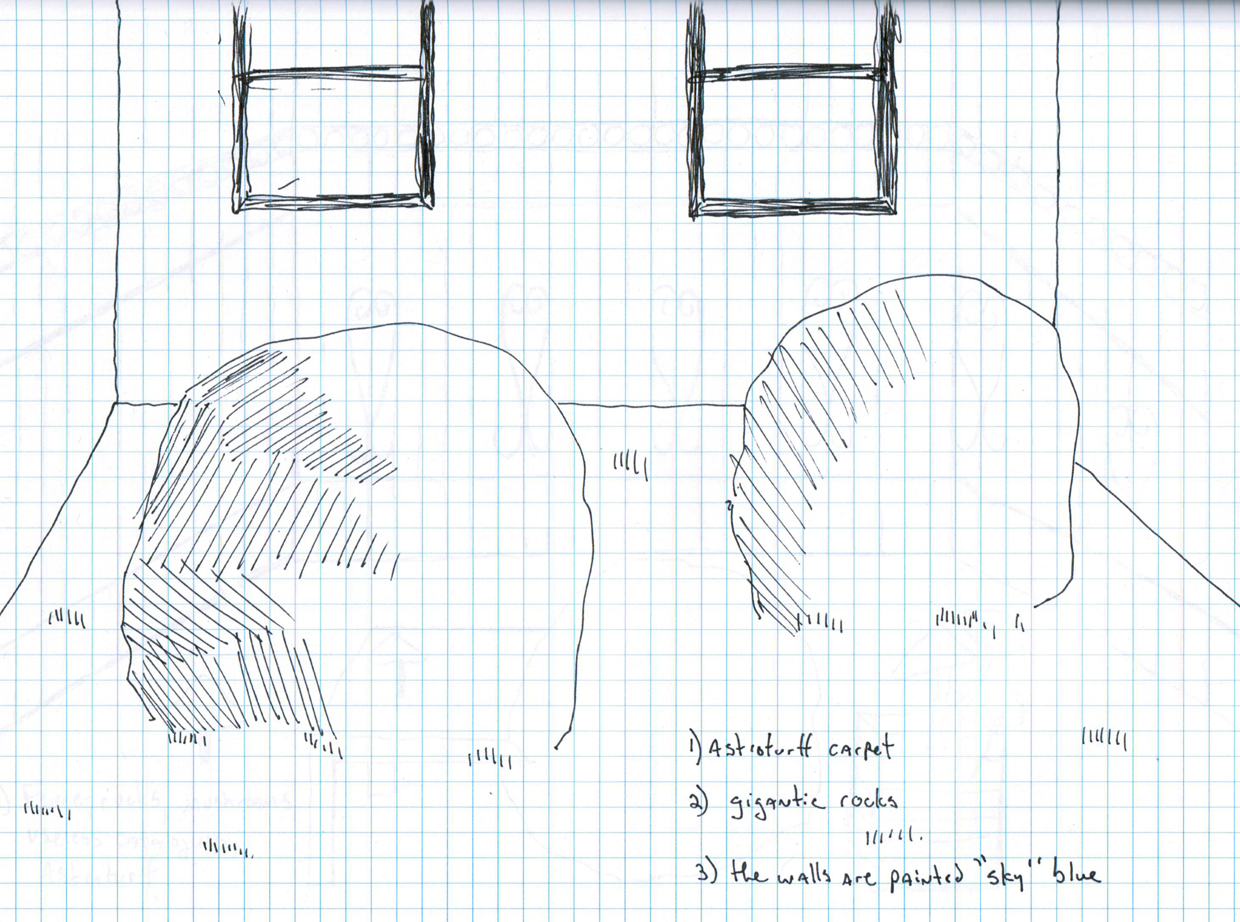
The nine drawings and several documentary photographs included in this proposal are examples of how I could alter an exhibition space with a sculptural installation. The work takes imagery and ideas from my paintings and renders them in three dimensions.

The first installation of this work was a part of the Governors Island Art Fair, a yearly event that takes place in an old coast guard barracks on Governors Island, just off the lower tip of Manhattan. The decommissioned operations base was turned over to the people of New York in 2003 and since 2008 has been host to a growing and changing city park, historic landmark and a cultural events destination. Governors Island's designation as New York's newest public park became the core of my installation, a park within a park and an ode to parks everywhere.

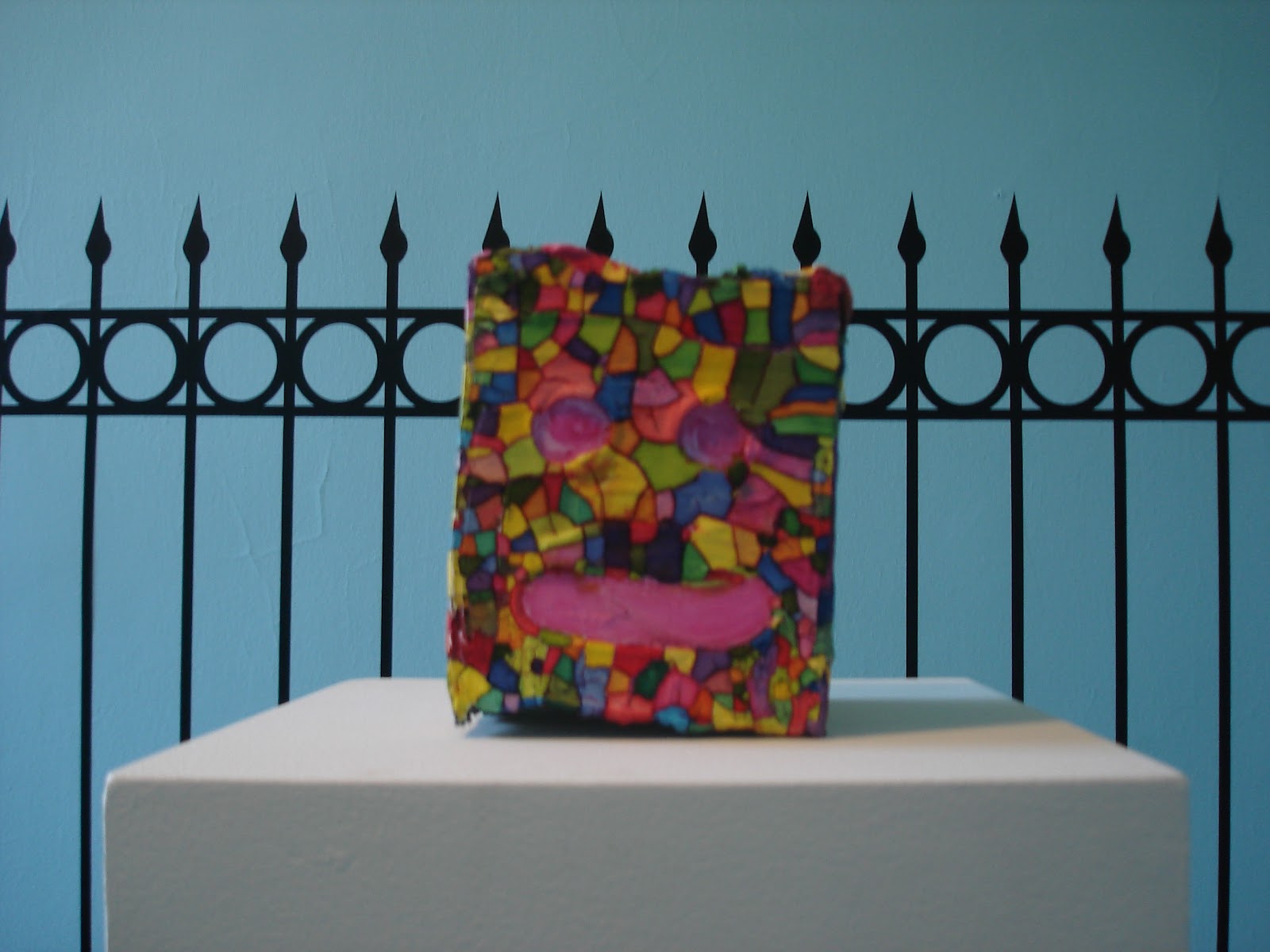
More than just an inside-out room the installation provides a different context to situate painting. The sculpture, fence, blue sky and astroturf in the space mimics the depiction of a sculpture in the painting on the wall. Sculpture then becomes a kind of recursive painting, the room becomes a deadpan painting of itself. Other possible iterations of this basic theme can be seen in the 9 drawings I've included in the image portion of this proposal. A future installation would, like the Governors Island piece, take into account it's surroundings as well. It would become an ode to Charleston I suppose, a place I once lived near and visited a number of times.


Artists Statement:

Through my work I attempt to examine the phenomenon of Papa Smurf as a metaphorical interpretation of both John Wesley's paintings and Andalusian sensibilities. What began as a personal journey has translated into images of spinach and toe that resonate with white people to question their own light blueness. My mixed media technique embodies an idiosyncratic view of ________, yet the familiar imagery allows for a connection between Harpo Marx and the Unicorn Tapestries.


Biography:

Christopher Moss is an artist living and working in Flatbush, Brooklyn. He is a recent recipient of a grant from Folsom Prison where he served time for stealing mugs and tie clips from the gift shop of The Mutter Museum in Philadelphia. Moss has exhibited in group shows at the local Piggly Wiggly and Shaheen Fine Art in Cleveland, Ohio and, more recently, had his first solo exhibition in February of 2011 at the AFA Gallery in Scranton, Pennsylvania. Moss is a regular reader of Artforum, October, Art in America, and Frieze. He graduated with a BFA from Marywood University in 2000 and he received an MFA from CUNY Brooklyn College in 2006. He fancies himself a comedian albeit perhaps a not-very-funny one in the “LOL” sense. His artist statement was written with the help of an artist statement generator he found on the website 10gallon.com, which is to say it's mostly made up but not entirely inaccurate.